
Use the drop-down summary to access the articles in the folder.

Terms of republication
You can republish this article for free on your website, blog, etc.
All hands on deck in the fight against ticks
With Séverine Bord, research engineer in statistical studies at the LISIS laboratory (interdisciplinary laboratory for Science, Innovation, and Society) at Université Gustave Eiffel, Nathalie Tortrat, mayor of Gouvernes and Anne Godin, director of the Marne-et-Gondoire Tourist Office.
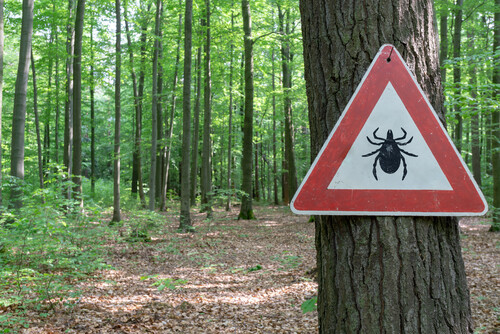
Climate change and the development of green spaces in towns and cities are increasing our exposure to ticks and therefore the risk of being bitten. The SOTIQUE project is an interdisciplinary experiment involving the residents of the Marne et Gondoire Urban Community.
Credit : gabort / AdobeStock_204717010
Ticks can transmit a number of pathogens, including Borrelia burgdorferi, the pathogen responsible for Lyme disease. To protect yourself, it is important to understand the risk and the precautions to take!
Cross-referencing data
The SOTIQUE project aims to model the risk of tick bites in peri-urban environments and contribute to research into nature in the city.
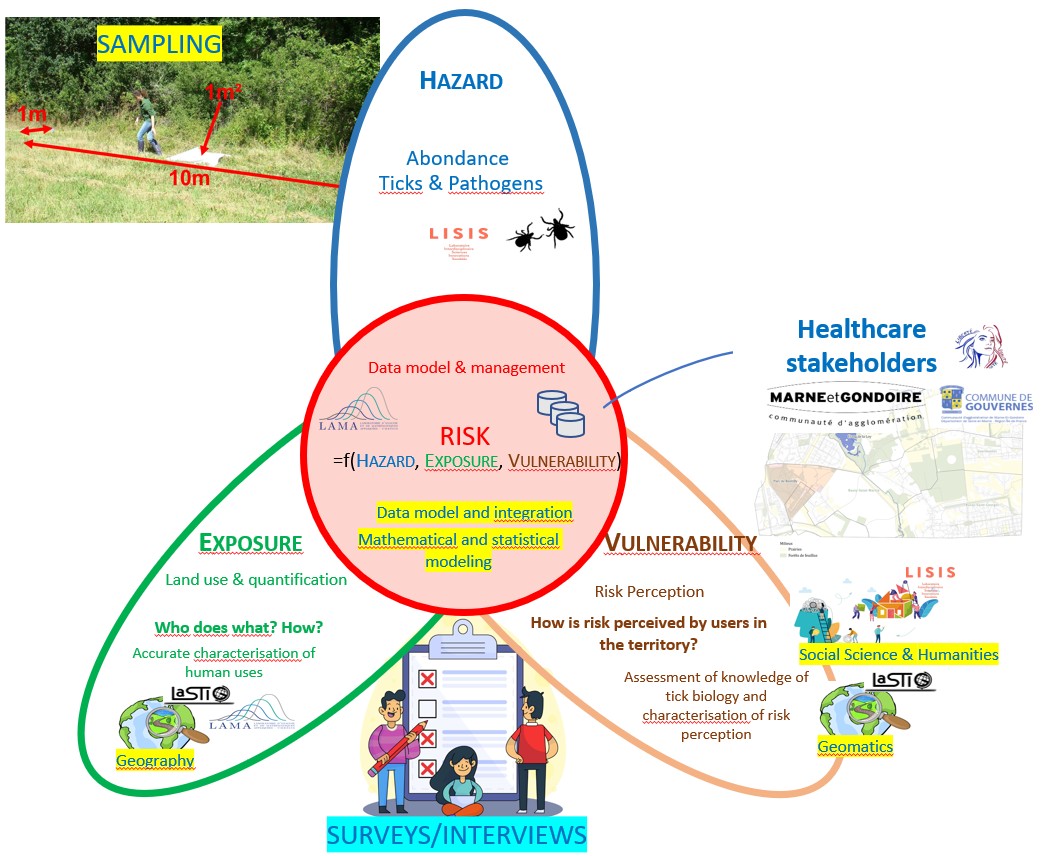
“Identifying places where there are a lot of ticks but nobody goes is less important, in terms of risk, than identifying places where there are fewer ticks but a lot of people go,” explains Séverine Bord, Research Engineer at LISIS (Interdisciplinary Laboratory of Sciences, Innovations and Societies), which is coordinating this research project.
A deployed methodology
Three criteria are being studied to assess, map and analyse the tick risk: the level of hazard, with the abundance of ticks and pathogens; the exposure of different users; and finally, public vulnerability (level of knowledge and risk perception). Parents who take their children to the park, dog walkers and hikers are being surveyed, to assess this last criterion as part of a participatory approach. The Commune of Gouvernes and the Marne-et-Gondoire Tourist Office helped to connect the Sotique project leaders with these different audiences. The results of the study will then be used to develop joint prevention initiatives.
Once this new methodology has been validated, it can be deployed in other regions, and even for other applied biology topics. It will also help to prepare for the increased risks posed by global warming and the possible arrival of new vectors.

Texts written by Canévet et Associés agency, following interviews with the project leaders and partners.
Identity card of the participatory research
| Title of project: | Projet SOTIQUE |
| Funding: | Université Gustave Eiffel, Guichet unique I-Site |
| Goal: | The SOTIQUE project aims to address the risk of tick bites in urban green spaces through participatory, multi-actor research (involving users of recreational areas, public managers of these areas and researchers from different disciplines). |
| Partners: | The project is led by the LISIS research unit with the participation of the LASTIG and LAMA units, of which Université Gustave Eiffel is co-supervisor, and also involves the Marne et Gondoire Urban Community (77) and the Commune of Gouvernes (77). |
| Key events: | |
| Main deliverable: | Awareness-raising brochure, Article for the municipal newsletter, “Le Gouverniaud” - December 2024 |
| Key words: | Ticks, risk assessment, hazard, vulnerability, exposure, statistical model, peri-urban area |
